

gov
Tiny Nationalisms
 Eleanor Roosevelt famously wrote, “Where, after all, do universal human rights begin? In small places, close to home.“ By implication, the same could be said for racism, nationalism and other ideologies.
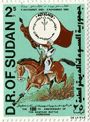
Official Representations of the Nation: Comparing the Postage Stamps of Sudan and Burkina Faso looks at the ideology of stamps:
“Sudan’s stamps focus on the political center and dominant elite (current regime, Khartoum politicians, and Arab and Islamic identity) while Burkina Faso’s stamps focus on society (artists, multiple ethnic groups, and development). Sudan’s stamps build an image of the nation as being about the northern-dominated regime in Khartoum (whether military or parliamentary); Burkina Faso’s stamps project an image of the nation as multi-ethnic and development-oriented.”
Ethnic identity is, of course, a tool in the Sudan government’s repression of Darfur.
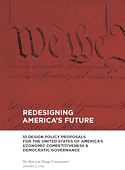
The results of a meeting held in Washington DC on November 30, 2008, this concise policy brief proposes a consolidated design policy that fosters “economic competitiveness & democratic governance.” The proposals are:
- Formalize an American Design Council to partner with the U.S. Government.
- Set guidelines for legibility, literacy, and accessibility for all government communications.
- Target 2030 for carbon neutral buildings.
- Create an Assistant Secretary for Design and Innovation position within the Department of Commerce to promote design.
- Expand national grants to support interdisciplinary community design assistance programs based on human-centered design principles.
- Commission a report to measure and document design’s contribution to the U.S. economy.
- Revive the Presidential Design Awards to be held every year and use triple bottom-line criteria (economic, social, and environmental benefit) for evaluation.
- Establish national grants for basic design research.
- Modify the patent process to reflect the types of intellectual property created by designers.
- Encourage direct government investment in design innovation.
The site is currently accepting comments on the proposals.
To the Spoils, Go the Victories
2012 |
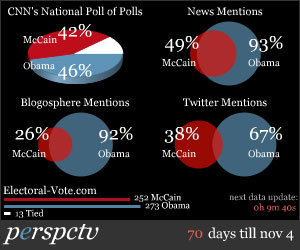
Candidates who spent the most won 94 percent of House races and 79 percent of Senate races. |
2010 |
In 85 percent of House races and 83 percent of Senate races, the candidate who spent the most money ended up winning. |
2008 |
“In 93 percent of House of Representatives races and 94 percent of Senate races... the candidate who spent the most money ended up winning.” |
2006 |
“In 93 percent of House of Representatives races and 67 percent of Senate races... the candidate who spent the most money won.” |
2004 |
“In 95 percent of House races and 91 percent of Senate races... the candidate who spent the most money won.” |
2002 |
“Just over 95 percent of U.S. House races and 75 percent of Senate races were won by the candidate who spent the most money.“ |
2000 |
“The candidate who spent the most money won 98 percent of the elections for positions in the House of Representatives. In the Senate the percentage was 85 percent.” |
1998 |
“In 94 percent of Senate races and 95 percent of House races, the candidate who spent the most money won.” |
1996 |
“92 percent of House races and 88 percent of Senate races were won by the candidate who spent the most on the election.” |
There are plenty of other factors (incumbents, for instance, tend to have a big financial advantage) but I found these numbers persuasive.
Updated November 11, 2012 to include 2012 numbers.
Bigger Better Bottle Bill
 Yesterday the New York State Assembly passed legislation to update the State’s “Bottle Bill”... with the “Bigger Better Bottle Bill.”
The bill (A-8044-A/Sweeney) expands the five-cent bottle deposit and refund to include non-carbonated beverages such as bottled water, iced teas and sports drinks. Unredeemed deposits will help fund New York’s Environmental Protection Fund. The old bottle bill did not require deposits on non-carbonated beverage containers, nor did it mandate that revenues from unclaimed deposits be paid to the State. Bottled water, teas, juices and sports drinks didn’t much exist when the initial law was passed in 1982, but have since grown to 25% of the market.
From the bill’s accompanying memo:
“New York’s ‘bottle bill’ is one of the State’s most successful recycling and anti-litter initiatives. There is less litter and broken glass in our streets, farm fields, playgrounds, parks and beaches as a result of the bottle bill. It has also reduced the burden of solid waste disposal that is shouldered by local governments and taxpayers.
Since the enactment of the original bottle bill in 1982, non-carbonated beverages such as bottled water, juices, teas and sports drinks have become extremely popular. Millions of bottles and cans from such beverages end up in the trash or littering the environment because consumers lack an incentive to recycle such containers.
Updating the bottle bill to include non-carbonated beverages will provide an incentive to make our environment cleaner and safer by increasing recycling. By requiring beverage companies to provide unclaimed deposits to the State for deposit into the EPF, the bill will also generate new funding for State and local environmental programs. It is estimated that expansion of the bottle bill will result in at least $100 million for deposit into the EPF.”
Watch a two minute video overview on YouTube from the Surfrider Foundation.
The bill was passed unanimously in the Assembly, but faces opposition in the State Senate. The law is opposed by big beverage corporations, grocers and liquor store owners who anticipate higher operating costs. On the other hand, the bill has an impressive list of supporters. NYPIRG has a campaign page up at http://www.nypirg.org/enviro/bottlebill.
Bottlebill.org tracks container deposit laws around the world that require a minimum refundable deposits on beverage containers.
You Don't Know the Half of It
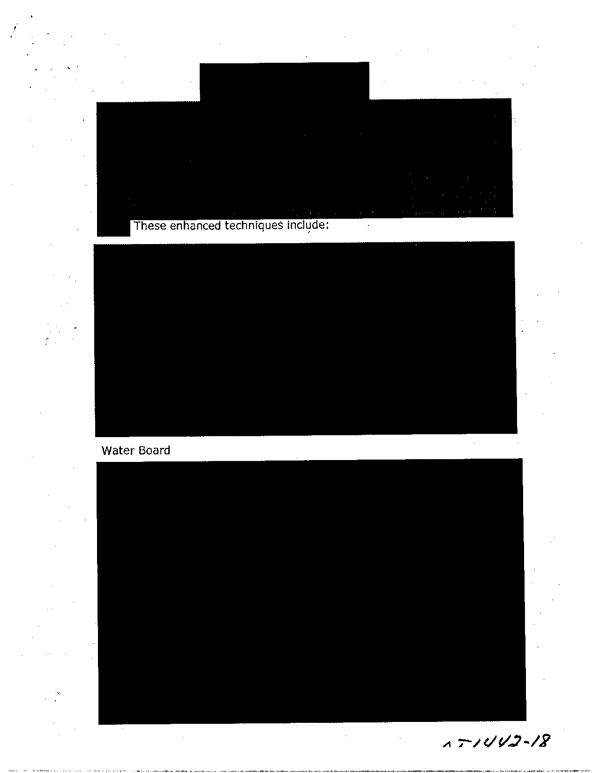
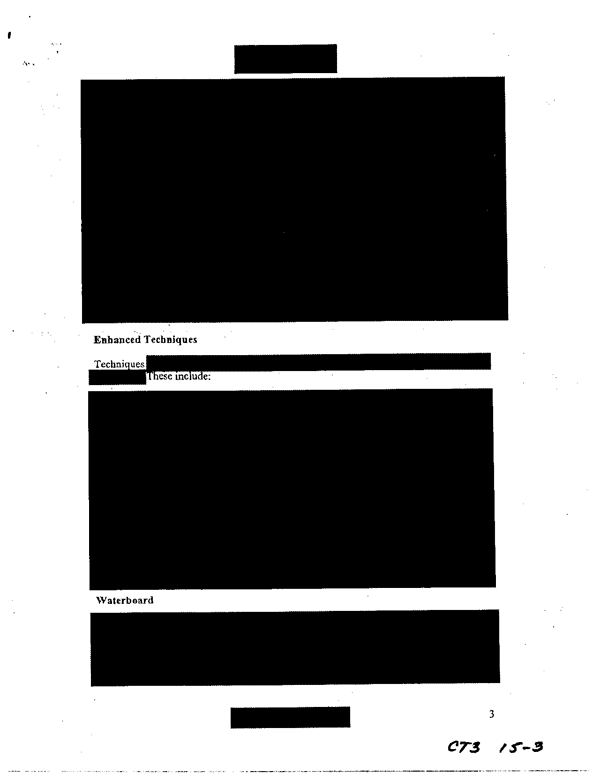
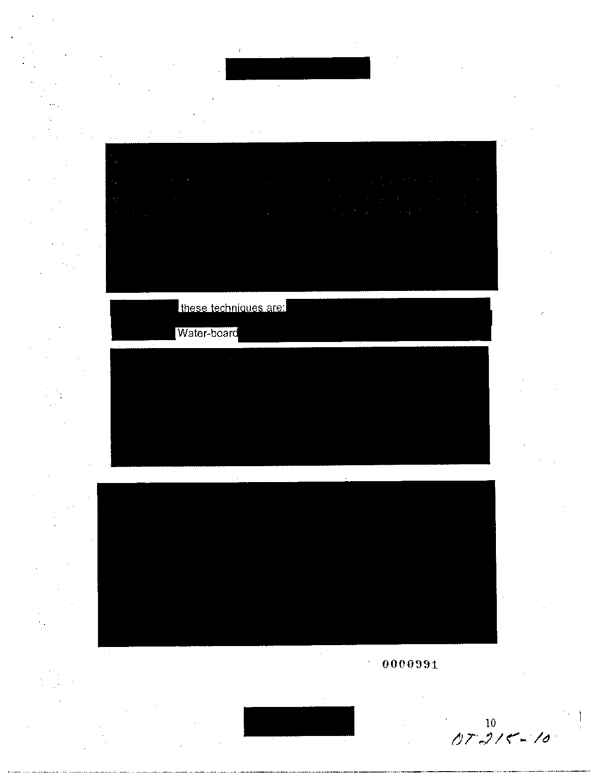
The ACLU has posted a handful of documents they’ve pried from the CIA about the use of waterboarding on prisoners in CIA custody.
After the Director of the CIA publicly admitted that the CIA has, in fact, used waterboarding, the agency could hardly argue that this was a state secret.
The documents are, of course, heavily redacted, an insolent gesture of spite to the court, the ACLU and concerned citizens. The graphic effect is comically absurd — and chilling to imagine what else lies beneath the black. Click below for a larger image.

 On March 18, the U.S. Postal Service announced that the Clover Technologies Group would provide postage paid envelopes to mail them expired inkjet cartridges, PDAs, Blackberries, digital cameras, iPods or MP3 players to be reused, refurbished or recycled. Envelops will be available at U.S. Post Offices at no cost to the public. Only a pilot project for now, but could expand nationally. (via)
 4 December 2007 | LINK | Filed in
cities, database, google, gov, infrastructure, mapping, org, transport
4 December 2007 | LINK | Filed in
cities, database, google, gov, infrastructure, mapping, org, transport
To Where, From Whom
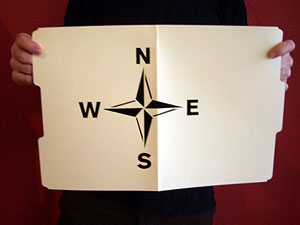
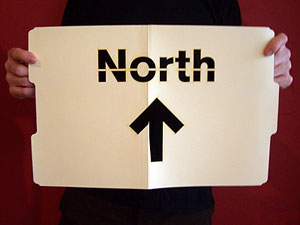
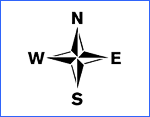 Folks reading my most recent post about the New York City’s implementation of the compass rose by subway exits may have thought the Department of Transportation took its inspiration from my blog. Not so.
I came up with the idea in conversation with out-of-towner Micah Anderson over dinner with the folks from Eggplant Active Media back on March 4, 2006 and later posted it to this blog.
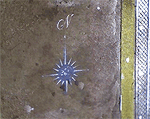
Graffiti roses showed up near downtown exits three weeks later, though I was never sure if my post inspired this. After kottke.org picked up my link, I received this email:
hey man,
i am NOMAD, I have been doing the compass rose graffiti, someone just showed me your post on it,
great minds think alike....
However, while this was all in March 2006, last week’s New York Times article on the DoT’s 2007 implementation of the compass, cites the new transportation commissioner who says she got the idea from “an Upper East Side man who was among about 20 New Yorkers quoted in The New York Times in January 2006 in an article about practical ways to improve the city.”
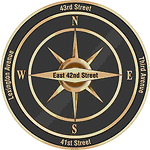 But wait, there’s more!
After my post about the official NYC rose was picked up by a couple of blogs, I received an email from Mary Ciuffitelli who says she proposed the idea publicly back in 1992:
Hey John,
I like your website and design, but I have some news for you.
In 1992, I received an award from The Municipal Art Society for this compass rose idea. MAS ran a big competition called Design New York. There were seven winners out of 1500 entries, followed by an exhibit, an awards ceremony, a lot of press (including the New York Times), NBC TV News interviews, etc. I have my original sketch, award letter, ceremony program, tape of the TV interview, all the documents.
Fifteen years ago, there was talk of the city implementing the idea. In the meantime, friends and I talked about going guerrilla and just spray-painting compasses all over the subway system. I wish we had. I was working at a design studio back then, and there was plenty of enthusiasm. We designed a stencil for our plan based on the floor compass in the subway at Grand Central Station. If I keep digging through my stuff, I’ll find that drawing as well.
There were some pretty great ideas that came out of that contest. (Including a submission very close to mine.) Time to look back before setting down the history. This NY Times article boils down my idea to one sentence, but my submission included slightly more elaborate suggestions to reflect neighborhood character and landmarks.
Designing a Better New York, September 24, 1992 http://query.nytimes.com/gst/fullpage.html?res=9E0CE7DA1F3BF937A1575AC0A964958260
Since it looks like the idea is on the brink of becoming a permanent part of New York City design, I would like to set the record straight. Maybe you’d like to help me.Yours in brilliant ideas,
Mary
In the meantime, the folks at the Eyebeam OpenLab and Graffitti Research Lab generously let me use their laser cutter to produce a couple of stencils. I have 20 compass roses and 20 North arrows. Want to help put this up?
Send your postal address and PayPal me $2.00 for first class postage and I’ll send you one.