libraries

>  7 September 2009 | LINK | Filed in , ,
Captain Ahab’s Fine Seafood. Benjamin Button’s Diaper Service, Kafka’s Pest Control, Dr. Jekyll and Mr. Hyde’s Pharmacy. To promote reading, the Johnson County Library in Kansas City dressed their courier trucks as delivery vehicles for fictitious businesses based on literary classics. See photos of the trucks and the library’s press release.
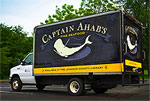
Captain Ahab's Seafood
>  29 June 2009 | LINK | Filed in , ,
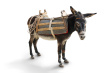
Book Mules. Mule In Venezuela, four-legged mobile libraries, bibliomulas, help distribute books in the foothills of the Andes. (thanks)

>  7 August 2007 | LINK | Filed in , ,

Shhh!

Hooray for librarians!

As if there wasn’t enough to thank your librarian for, from Berkely to Madison, Palo Alto to Whatcom County, librarians are taking a stand against the USA Patriot Act.

Via Wired I discovered the work of Jessamyn West a librarian in Rutland, Vermont.

While the Patriot Act says you can not tell patrons if the FBI is monitoring library computers or requesting patron records, it doesn’t say you can not not tell them:

The FBI has not been here. [watch very closely for the removal of this sign]

The Vermont Library Association has provided copies of the sign to every library in the state.

See more signs here.

>  12 October 2004 | LINK | Filed in ,

Banned in the U.S.A.

Classic book cover design on display in the streets in New York City.


Banned Books Poster

Banned Books Poster


The posters were designed by the artist Chuck Close. You can download high resolution PDFs here and here.

See the American Library Association’s list of 100 most frequently banned books.

Read more about Banned Books campaigns by the ACLU and the ALA, and about the ACLU’s concert event.

>  29 September 2004 | LINK | Filed in , ,

A Bug’s Life

A “union bug” is a tiny logo used to designate items that have been produced with union labor.

“Printers have been know to use a bug to designate union labor as early as October 15, 1891, when it appeared at the head of the editorial column of the Compositors (I.T.U.) Typographical Journal. The first known use of a bug in commercially-produced documents was by the [International Printing Pressmen Union of North America] in May 1893.

BugThe union label has at least five purposes:

  1. It is a protection against anti- or non-union shops that might otherwise profess union working conditions.
  2. It can be part of a public-relations campaign to induce customers to buy union-made products.
  3. It is a sign of good workmanship and quality standards.
  4. It is badge of union prestige to attract new members.
  5. It is warning against trespass by competitive unions.

Bugs usually appear discreetly at the corner of a back page or at the bottom of a title page.... The most common union bug is that of the Allied Printing Trades. It signifies that all aspects of the work, from typesetting to finishing, were performed by union labor. This bug contains several important pieces of information. The lower arc contains the geographic region, which may be a city ("New York") or a broader area ("Northern California"). Coupled with that location is a shop name or number. The number is permanently assigned when the shop is organized. A regional list of union shops, indexed by shop name and number, is available from the local Printing Trades Council. A national database is also now available on-line.”

...

So in addition to recession, years of declining union membership, and an increasingly hostile organizing environment, the union bug, proud mark of much hardship and struggle, is being written out of the history of the documents that bear it. While archivers and catalogers of printed matter note publisher, printer, city and date of printing, they almost always exclude information encoded in the union bug and even fail to mention the bug at all.

From Proposal for Inclusion of Union Label Description In Bibliographic and Archival Cataloging Guidelines:

“Most catalogers have no idea what to do with them. Full cataloging of bug-bearing documents either omits mention of them at all or indicates only that which is recognizable.... Direct inquiry confirmed that ‘The Library of Congress has not sought to describe (this) level of detail... when encoding historical documents with the American Memory DTD [Document Type Definition].’...

The authoritative source on cataloging guidelines is the Anglo American Cataloging Rules (AACR). According to Michael Gorman, Dean of Libraries at C.S.U. Fresno and editor of the AACR, ‘I can safely say that the Union Bug is not mentioned in any English-language cataloguing code.’

A review of the 1988 edition provides several potential loci for specifying union bug information.... Given that the union bug is a valuable piece of cataloging data, I would like to propose that it be formally included in AACR, MARC, EAD, and other archival cataloging protocols. The default option should be that absence of information means that there is no bug. If a bug is present, however, the relevant information should have a designated place to record it.”

>  3 January 2003 | LINK | Filed in , , , ,