

posters
Why
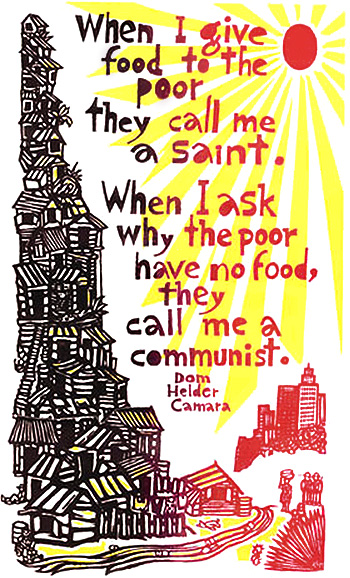
Poster design by Ricardo Levins Morales and the late great Northland Poster Collective.
 31 July 2009 |
  The Center for Urban Pedagogy has announced a call for designers for the next round of Making Policy Public. This year’s fold-out poster designs will cover policy briefs on:
- Preserving public parks and historically safe spaces for LGBTQ teens in the context of rapid privatization of public space.
- Enabling public housing residents to become active participants in critical decisions about the developments where they live.
- Educating the public about the redistricting process and reforms that can make it less subject to political manipulation.
- Helping youth and their families navigate the juvenile justice system.
- Visualizing market forces along the tomato supply chain that give rise to sweatshop working conditions in the Florida tomato industry.
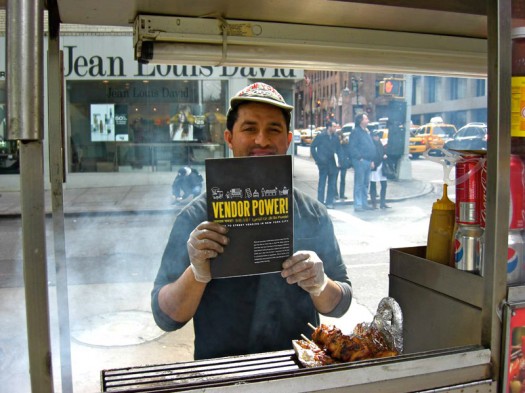
Vendor Power!
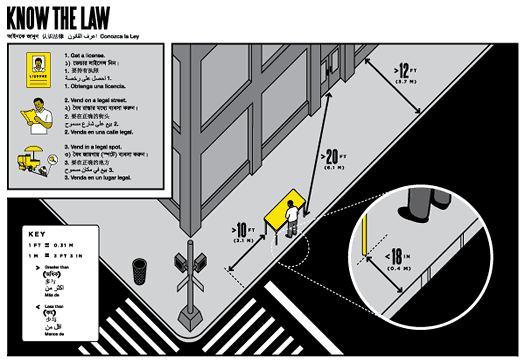
Candy Chang has written up an excellent overview of her process producing a visual policy brief for Making Policy Public. Street vendors in New York City can be hit with a $1,000 fine for such minor infractions as not displaying their badge prominently enough, or for not placing their cart precisely in relation to the curb or store fronts. To clarify the confusing regulations from multiple NYC agencies, the Street Vendor Project and Center for Urban Pedagogy worked with Candy to create this visual, multi-lingual fold-out poster that demystifies vendor rights and regulations (along with a few fun facts.) Check out Candy’s write-up and download a PDF of the poster. Knowing one’s rights can potentially make a big difference in the lives of street vendors and their families.
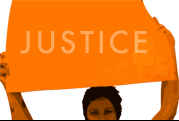 Do you know a peace or social justice organization who need a mass produced poster to further their work? “The Serve the People Poster Project is a donation offered by Design Action Collective and Inkworks Press to your organization. All you have to do is present an idea, and if selected, Design Action will donate $1000 of design, and Inkworks will print 1000 full color, tabloid sized posters for you use as you wish. For free.” In particular, they are looking for: “issues that are difficult to find foundation funding for, either because of subject matter or timeliness.” Very cool! Find out more.
Futurismus
People turned out by the hundreds of thousands to protest the US invasion of Iraq. Why aren’t they in the streets about the financial collapse? Perhaps it hasn’t quite sunk in for some?
A series of street posters in Berlin help envision the struggles to come.
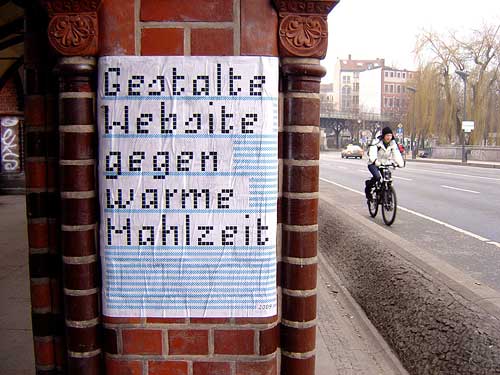
Will Offer Web Design for Hot Meals
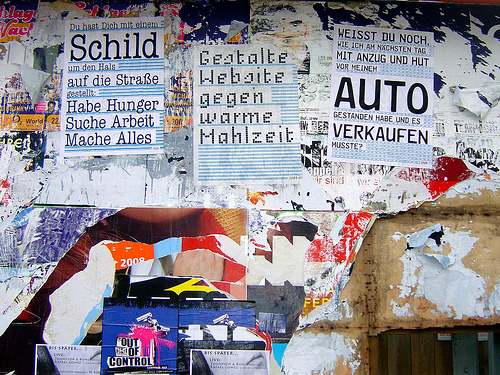
Left: “You took to the streets with a sign around your neck: hungry, looking for work, will do anything.”
Right: “Do you remember how on the next day I stood in front of the car in suit and tie and had to sell it?”
Discourse on Method
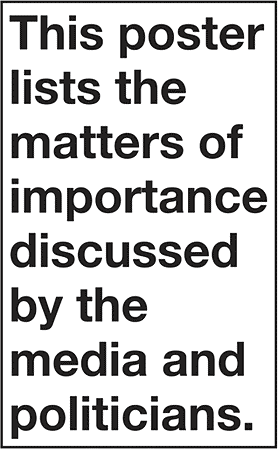
Made me laugh. Designed by Jorge Arrieta.
Use as Directed
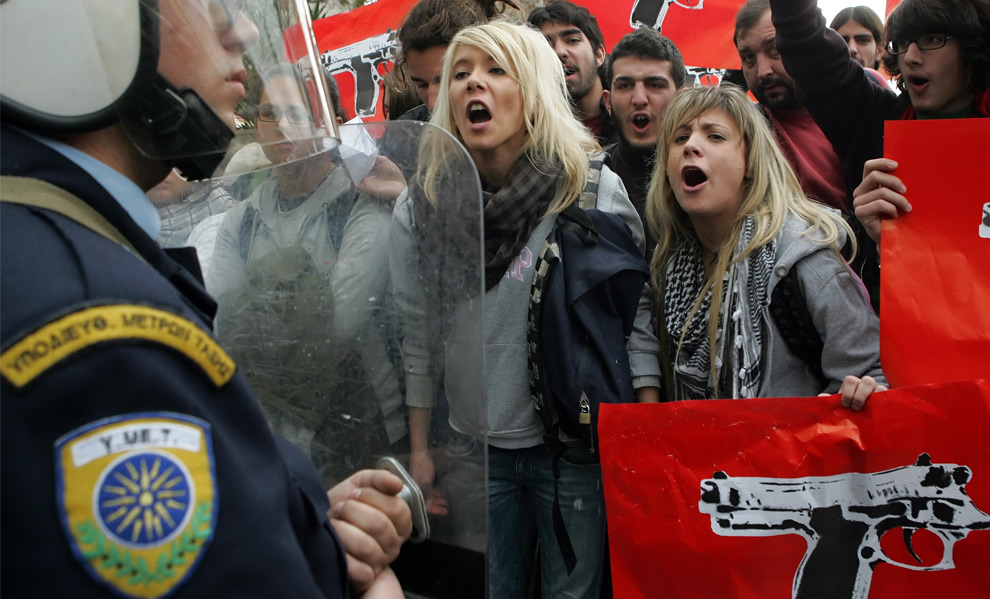
Looking at some of the striking photos of the December protests in Athens, I noted a couple of images a week apart with this poster of a gun turned on its owner.
It’s an iconic image, but I think it takes on a different meaning in an oppositional context vs a memorial. Regardless, while trying to find out more about its source I instead found this mixed collection of 41 posters by Greek designers in response to the riots.


Linkbox
A few collections of wonderful things:
- Political street art mostly related to the U.S. presidential election
- Anti-war stencils, a Flickr group
- Activist images and posters from around the world in the traveling Propaganda III exhibition
page 19 18 17 16 15 14 13 12 11 10 9 8 7 6 5 4 3 2 1 Older »