



built
Build a Green Bakery. “When is a bakery not a bakery? When it’s a political statement, an architectural pioneer, and a bit of performance art, all wrapped in one — as is the case at a mysterious new East Village purveyor of cookies and croissants.... The walls are made from wheat and sunflower seed; the floor from a cork by-product. The paint is milk-based, and its pigment derived from beets. Tufts of denim insulation make a base for the bamboo counter, and the staff is clad in racy hemp-and-linen jackets.” The cookies are good, too.
 3 March 2006 |
 Cooperative Housing for and by the Aging. “Opting for old age on their own terms, they were starting a new chapter in their lives as residents of Glacier Circle, the country’s first self-planned housing development for the elderly — a community they had conceived and designed themselves, right down to its purple gutters. Over the past five years, the residents of Glacier Circle have found and bought land together, hired an architect together, ironed out insurance together, lobbied for a zoning change together and existentially probed togetherness together.” (via)
A House for an Ecologist: A Design Ideas Competition. The AIA is sposoring a compeition to design a modest, sustainable house on the Potomac River. Entries will be judged on design excellence, celebration of place, respect for resources, and design process. (“How do innovative design methods promote great design? Collaborative and interdisciplinary teams are encouraged.”) Deadline for registration is March 17, 2006.
World Prison Population. (50KB PDF) by country, 2003. Though only 4% of the world’s population lived in the U.S. in 2003, the U.S. held 23% of the world’s prison population — more than any other nation.

Is it too easy for buildings to get certified as eco-friendly?. “Unlike other so-called green products... some green buildings are little more energy-efficient than traditional structures. Yet they manage to earn a coveted certification from the U.S. Green Building Council, a leading, private environmental organization.... At issue is the Green Building Council’s [LEED] checklist system that certifies projects as green. Some critics say the system gives too much weight to certain easy tasks, while giving the same weight to much more expensive ones.”
Hemp for Houses. Building with compressed hemp boards and ‘hempcrete’ is a sustainable alternative to killing trees. A 2002 UK study found hemp homes use less energy to build, create less waste and take less fuel to heat, though cost about 10 percent more to build than conventional houses. (via)
2006 Olympics: Art, Sports & Fascism. The Turin Winter Olympics take place in a stadium financed by, dedicated to, and briefly named after Benito Mussolini. The 2006 Opening Ceremonies included a “Salute to Futurism.”
Sustainable Leadership Awards. I hate design competitions for many reasons, but this one looks promising. Prizes for best practices, leadership, and sustainable design in interior design, architecture for large and small for-profit companies, and for non-profit organizations. Here’s hoping for an affordable housing category next year.
East Village Memorial
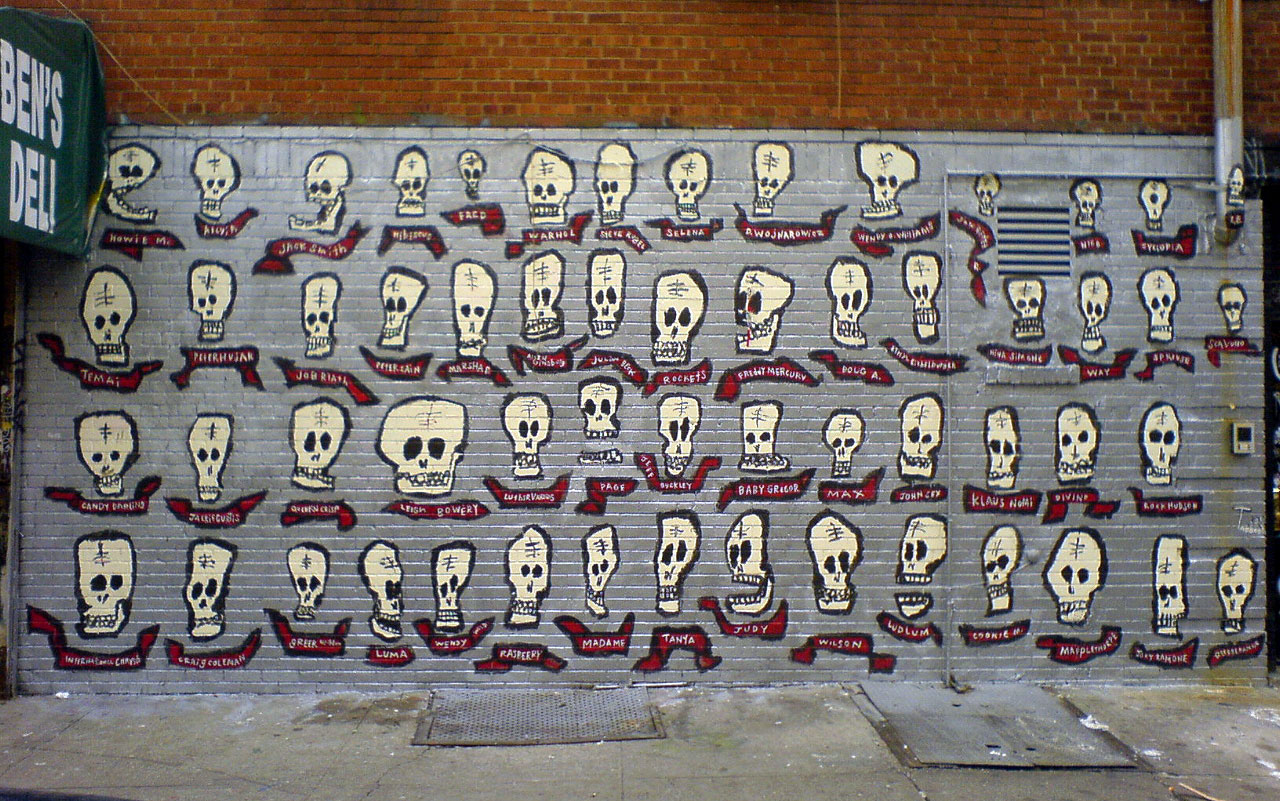
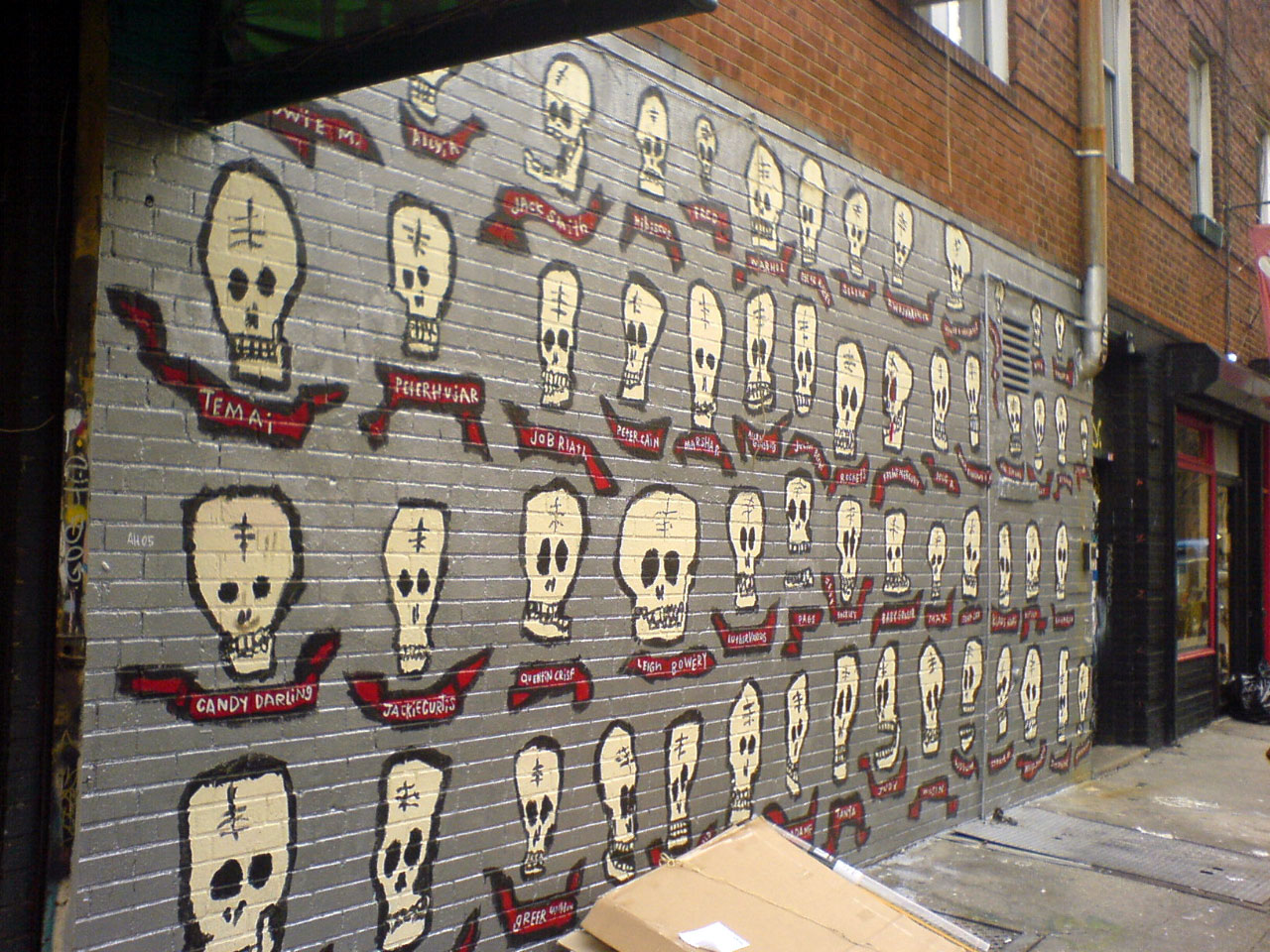
This memorial is painted on the side of Mamma’s Food Shop on 6th street and Avenue C. Click the image above for a larger version. The mural is signed by Taboo!, an East Village drag queen. I couldn’t find much about her online except mention (and a photo) in this old Wigstock release.
The piece commemorates a mix of stars, artists, drag queens, and others. Some died of AIDS, others were East Village locals. Some names I recognize, others I do not. Members of a family quietly fading.
page 20 19 18 17 16 15 14 13 12 11 10 9 8 7 6 5 4 3 2 1 Older »

