



built
Moscow Underground
Some links about the “Diggers of the Underground Planet,” a group of urban adventurers exploring the tunnels beneath Moscow. Discoveries include a 3,000 seat bunker under a cathedral, deserted chemical warfare labs, ancient stashes of skulls, alternative housing, a ring of metro stations never used by the public, and possibly a mass grave from the Stalin era.
Found via Metafilter.
 13 June 2002 |
 Stop Incineration Now
“GAIA is an expanding international alliance of individuals, non-governmental organization, community-based organizations, academics and others working to end the incineration of all forms of waste and to promote sustainable waste prevention and discard management practices. Since GAIA members are committed both to ending incineration and to promoting alternative safe, economical and just discard management systems, the name GAIA represents both a Global Anti-Incinerator Alliance and a Global Alliance for Incinerator Alternatives.”
Typographic Tour
Public Lettering: A Walk in Central London “is based on a walk by Phil Baines for his graphic design students which was then written up for the 1997 ATypI conference. The text has been updated and expanded to include other examples. This walk concentrates on larger examples of public lettering and doesn’t mention incidentals — stop—cocks, manholes, dates on buildings, builders marks, &c — of which there is much en route.”
Found via xblog.
The Ashden Award
The aim of the Ashden Award is:
“to support a project that will provide support to a rural community in a developing country, in a way that alleviates poverty and improves the quality of life, while remaining fully responsive to existing cultural values. The project would need to provide an energy source either for income-generating or agricultural activities or for improving educational or healthcare facilities. The project should have an exemplary value, that could encourage the use of environmentally-friendly, sustainable sources of energy in similar contexts.”
Check out some winning projects.
Settlements in the West Bank - The Authoritative Map
“This high-detail, colour-coded map with case studies shows the fragmentation of West Bank territory and the Jewish settlements in painstaking detail. For the first time, it reveals the potential settlement expansion provided for in masterplans. This downloadable map is the most contemporary and detailed description of the Israeli settlement project in the West Bank.”
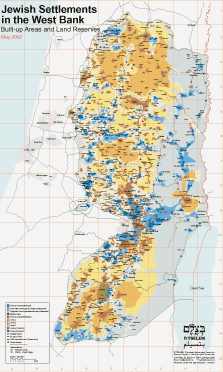
The article has been removed from openDemocracy site, but is accessible in the Web Archive.
The map is still available from the B’Tselem Web site.
PVC Alternatives Database
“From its manufacture to its disposal, PVC emits toxic compounds. During the manufacture of the building block ingredients of PVC (such as vinyl chloride monomer) dioxin and other persistent pollutants are emitted into the air, water and land, which present both acute and chronic health hazards. During use, PVC products can leach toxic additives, for example flooring can release softeners called phthalates. When PVC reaches the end of its useful life, it can be either landfilled, where it leaches toxic additives or incinerated, again emitting dioxin and heavy metals. When PVC burns in accidental fires, hydrogen chloride gas and dioxin are formed. For virtually all PVC applications, safer alternatives exist.... This international database is intended to help anyone from do-it-yourself enthusiasts to construction companies track down alternatives to PVC products.”
From Greenpeace.
Porch of Tolerance
“Christopher Hitchens reminds us that of the three religions of Abraham—Islam, Christianity, and Judaism—Islam is the only one that admits the legitimacy of the other two [‘Minority Report,’ April 15]. A further reminder: The reason Jews have been able to pray at the Waling Wall for nearly 500 years is that Sultan Suleiman the Magnificent... ordered his chief architect to construct a porch for them to pay their duty to God at the most visible surviving portion of their ancient temple.”
Richard Klein, letter to The Nation, May 27, 2002.
125 Top Engineering Projects
In July 1999 , the editors of the Engineering News-Record published their list of 125 significant projects completed since 1874 as part of the magazine’s 125th anniversary celebration series. Each project “must have been completed in the past 125 years; the project advanced construction methods or technology; the project demonstrated outstanding design or overcame unusual design challenges; the project was the first of its kind; the project made a major positive impact on the quality of life; the project overcame major construction challenges; the project has become larger than life over time; and the project demonstrated geographic and market diversity.” The projects are listed here.
Water, Hydrogen Power Island
“According to this article in The Herald Newspaper, the island of Islay, on the West coast of Scotland is set to become the world’s first Hydrogen Fuel Cell powered island. Scientests at Napier University wish to use the existing Wave Power Station to treat sea water and store the resulting hydrogen in fuel cells. The first plan is to power a building, moving on to powering the entire island in a decade.” From slashdot.org.
Water to the World
March 22 is World Water Day. Safe drinking water, basic health, hygiene education and sanitation facilities are nonexistent for impoverished people throughout the world. WHO/UNICEF estimates that the combination of theses conditions results in the death of 6,000 people every day, most of them children. Western NGOs that are working to build sustainable water supplies, provide access to clean water, develop sanitation, and promote hygiene, include: WaterAid, UK; Water For People, USA; WaterCan/EauVive, Canada; and Water for Survival, New Zealand.

